Instructions
Begin by laying out approximately six feet (1.8 meters) of tinfoil on a clean, flat surface to create a sturdy base for shaping your lasagna. Arrange four clusters, each containing two no-boil lasagna noodles, towards the left half of the foil sheet, spacing them about half an inch (1 cm) apart. This careful spacing helps ensure the layers will stack neatly.
Fold the right half of the foil gently but firmly over the noodles, pressing down flat to secure them in place. To help visualize where your noodles lie beneath the foil, run your finger along their edges to leave a gentle imprint. Next, fold the top and bottom flaps of the foil over, pressing and creasing firmly to create a snug package.
Flip the foil assembly onto the table so it stands upright. Carefully shape the noodles into a square box, using the four noodle clusters as a guideline to form the walls and sides. Fold and press any excess foil tightly to join the ends, ensuring the structure is firm and stable, then set aside for later use.
Turning to the béchamel sauce, melt the butter in a large pot over medium heat until it bubbles invitingly. Whisk in the flour and cook until the mixture turns a lovely light golden shade, signaling the beginning of a smooth roux. Slowly and steadily drizzle in the milk, whisking constantly to prevent lumps, and continue stirring as the sauce thickens and comes to a boil. Season with salt, black pepper, and a fragrant pinch of nutmeg. Once ready, transfer the béchamel to a large bowl, press plastic wrap directly onto its surface to avoid a skin, and set aside.
For the meat sauce, heat olive oil in a very large pot on high until it shimmers with heat. Add diced onions, carrots, and celery, cooking until they start to sweat gently but remain uncolored, which preserves their sweetness and texture. Next, add the ground beef, using a wooden spoon or spatula to break it into small, even pieces. Cook, stirring occasionally, until about half of the liquid has evaporated, concentrating the flavors.
To the pot, stir in tomato sauce, tomato paste, chicken stock, salt, and black pepper. Mix thoroughly, breaking apart any clumps of meat. Reduce the heat to low, cover the pot, and let the sauce simmer slowly for about two hours to develop depth and richness.
Preheat your oven to 350°F (180°C). Grease a 9x9-inch (23x23-cm) square baking pan and line it with two sheets of foil that extend beyond the sides, enabling easy lifting later. Begin layering by spreading a thin layer of béchamel on the foil-lined pan, and lay down two lasagna noodles. Over these, spread a thin layer of meat sauce evenly, followed by another thin layer of béchamel. Repeat this sequence — noodles, meat sauce, béchamel — alternating the direction of the noodle layers each time to provide structural strength and an appealing pattern.
Once you have reached 50 layers, place the prepared foil noodle box over the lasagna to help maintain its upright shape and stability. Continue layering until you reach the 99th layer.
Sprinkle freshly grated Parmesan cheese generously over the top, then cover the entire lasagna tightly with foil. Bake in the preheated oven for about one and a half hours, uncovering the foil halfway through baking to allow the top to develop a beautiful, deep golden brown crust.
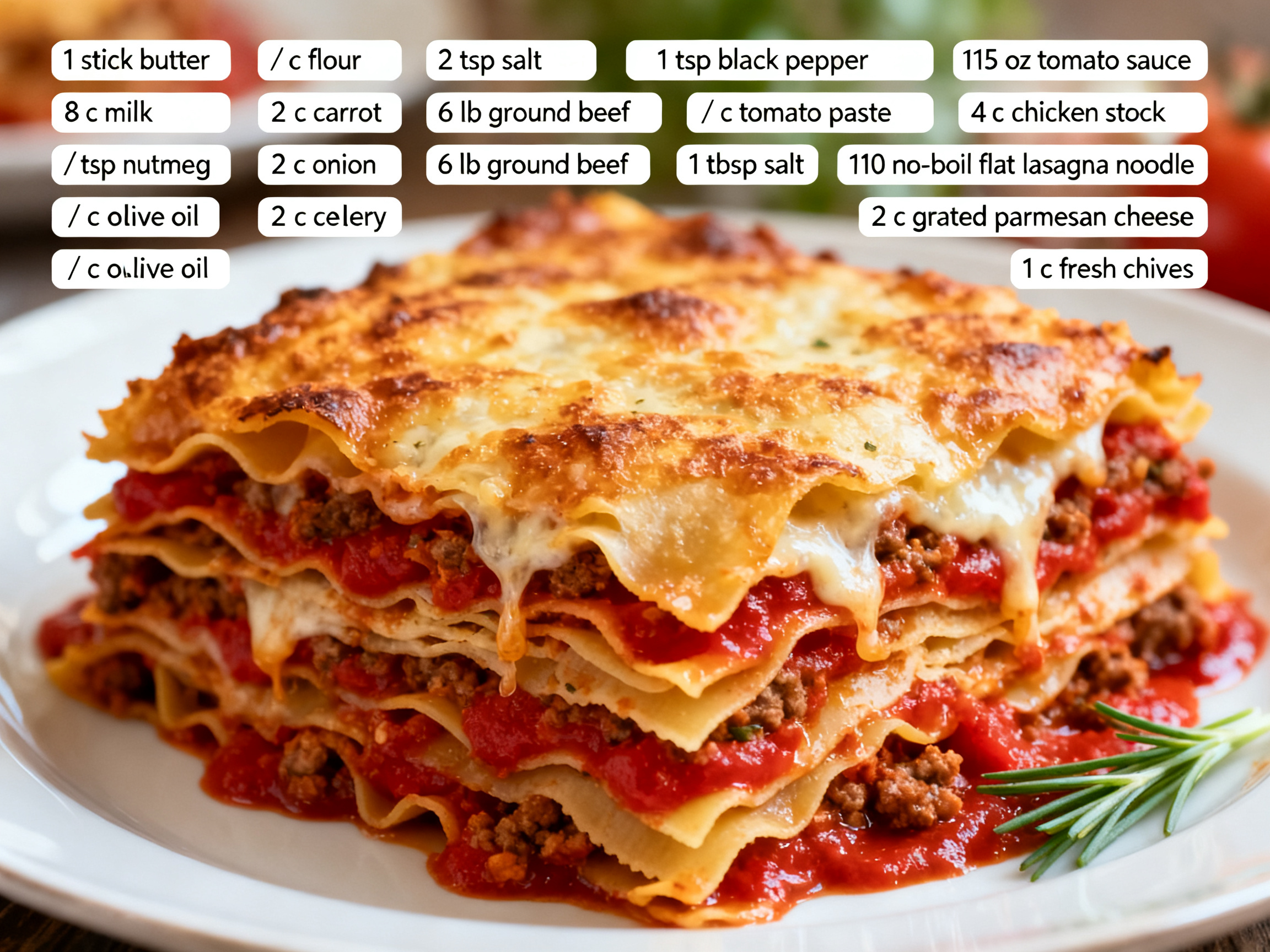
After baking, cool the lasagna for at least two hours to let it set and firm up. Carefully lift the lasagna using the foil sleeves onto a large cutting board. Gently peel away the foil walls, revealing the magnificent layered masterpiece. Sprinkle freshly chopped chives over the top for a vibrant herbal note.
Using a sharp knife, cut the lasagna into squares and serve. The rich, creamy layers and robust flavors will delight your guests. Enjoy the unique satisfaction of crafting and sharing this monumental culinary triumph!