Instructions
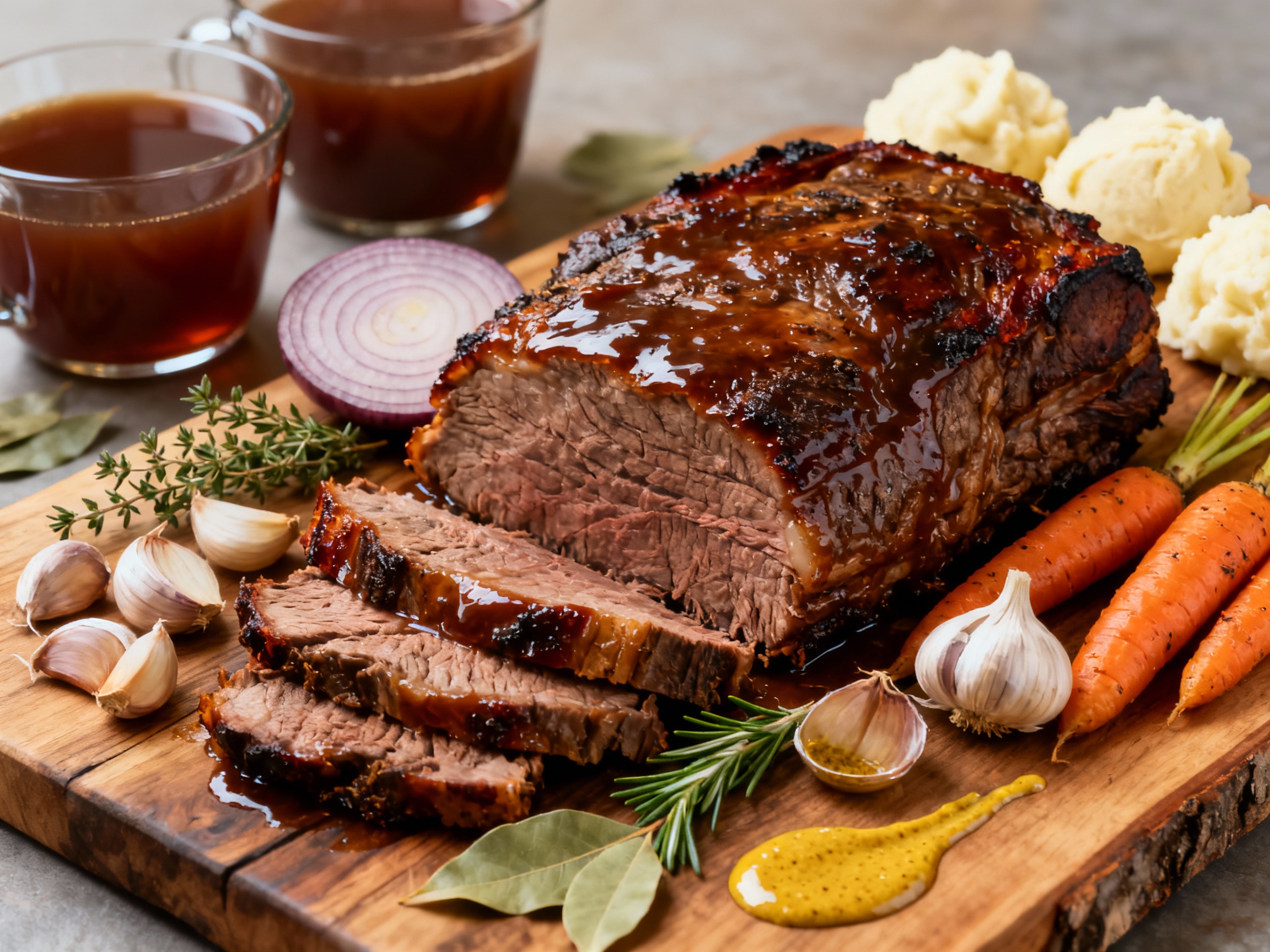
1. Prepare the brisket for cooking: Begin by inspecting the brisket to find the fat layer on one side—it’s essential for keeping the meat moist and flavorful during cooking. Trim off any large chunks of fat so that only a thin, even layer remains, as oversized pockets won’t render down properly. Using a sharp knife, carefully score the fat in parallel lines about 3/4-inch apart, slicing only through the fat and not into the meat. Then slice in the opposite direction to create a neat crosshatch pattern that will help flavors penetrate and fat render. Generously salt the brisket all over and let it sit at room temperature for 30 minutes to enhance flavor and tenderness. 2. Sear the brisket: Choose a sturdy, oven-proof Dutch oven that just fits the brisket with a little room for the onions. Pat the brisket dry with paper towels—this ensures a beautiful crust. Place the brisket fat side down in the preheated pot over medium-high heat. Allow it to sizzle gently for 5-8 minutes until the fat side develops a rich, golden-brown sear. Adjust the heat if it’s cooking too aggressively—you want a steady sizzle, not burning. Turn the brisket over and brown the other side, building layers of flavor. 3. Sauté the onions and garlic: Remove the brisket and set it aside. There should be a couple of tablespoons of flavorful fat in the pot; if not, add a splash of olive oil. Add the chopped onions with a pinch of salt, and raise the heat to high. Stir often and sauté until they are lightly caramelized and fragrant, about 5 to 8 minutes. Stir in the garlic and cook for an additional 1-2 minutes until the garlic releases its aroma. 4. Return brisket to pot, add herbs and stock, bring to simmer, cover and cook: Preheat your oven to 300°F (150°C). Tie the bay leaves, rosemary, and thyme together with kitchen twine for easy removal later. Push the sautéed onions and garlic to the sides of the pot, nestle the brisket in the center, fat side up, then pour in the beef stock. Add the tied herbs, and bring the liquid to a gentle boil on the stovetop. Cover the pot and place it in the oven to cook for 3 hours. Every hour, carefully flip the brisket to ensure even cooking and a tender finish. 5. Add carrots, continue to cook: After the initial 3 hours, add the large carrot chunks around the brisket. Cover again and roast for 1 more hour until the brisket is fall-apart tender and the carrots are soft and sweet. 6. Remove brisket to cutting board, tent with foil: Take the pot out of the oven, transfer the brisket to a cutting board, and loosely tent it with foil to rest. Remove and discard the herb bundle. 7. Make sauce (optional): If you prefer a sauce, remove half the onions and all the carrots and cover them with foil to keep warm. Pour the remaining liquid and onions into a blender and purée until smooth. For a tangy depth, stir in 1 tablespoon of mustard. Warm this sauce gently in a small pan before serving. 8. Slice the meat across the grain: Identify the direction of the muscle fibers—the "grain"—and cut slices perpendicular to these lines, about 1/4 to 1/2 inch thick. This technique breaks down the fibers, yielding maximum tenderness. Serve the brisket slices with the cooked onions, carrots, and any sauce you made. Classic mashed potatoes, egg noodles, or creamy polenta are ideal accompanying sides to soak up the delicious juices. Tips: For best results, remove the brisket from the fridge an hour before cooking to warm slightly. Reserve any leftover cooking liquid to add moisture when reheating leftovers. This pot roast tastes even better the next day as the flavors meld beautifully.