Instructions
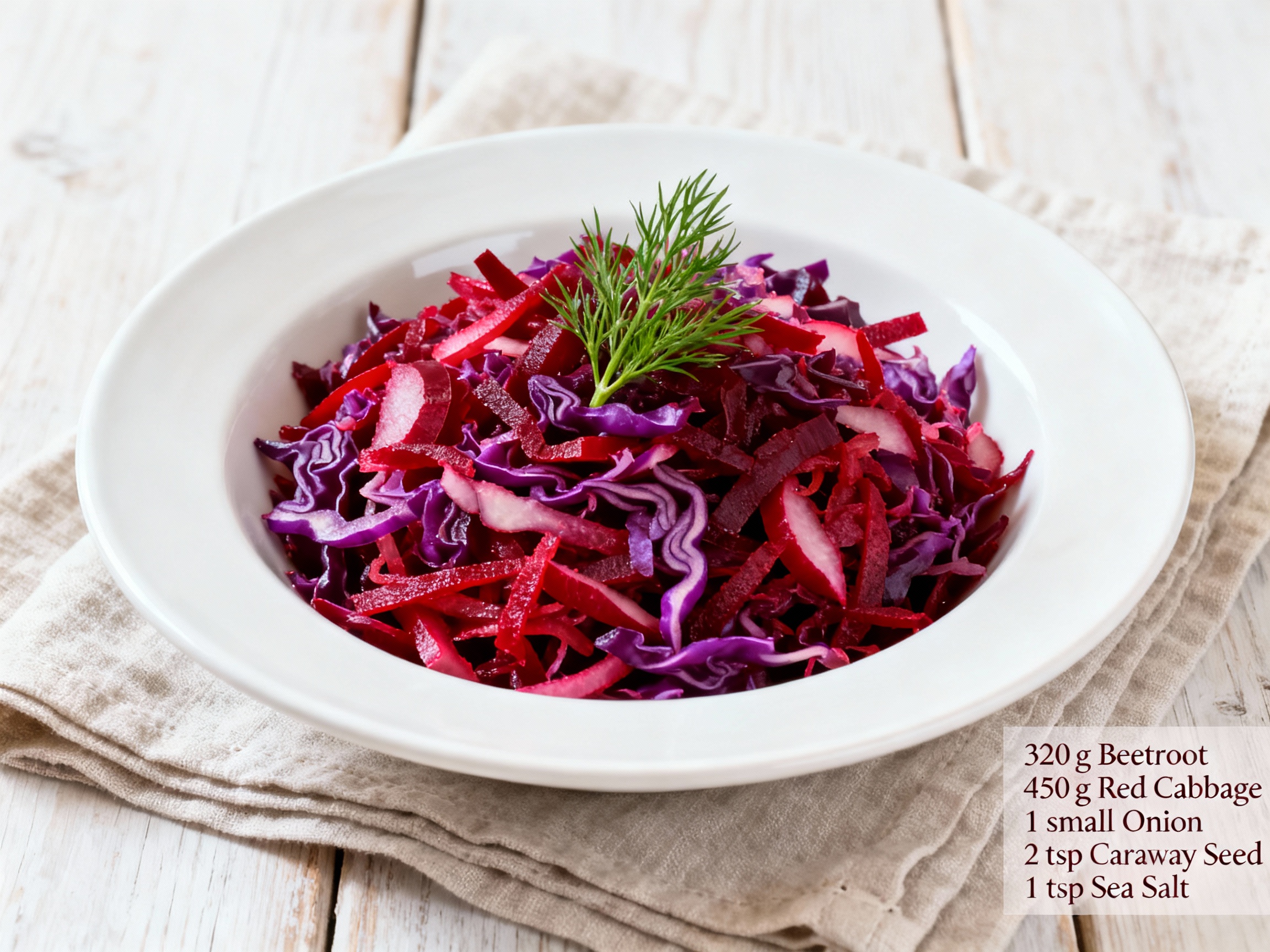
Step 1: Begin by placing the shredded beetroot, finely sliced red cabbage, thinly chopped onion, caraway seeds, and sea salt into a large mixing bowl. Sprinkle 1 to 1½ teaspoons of freshly ground black pepper over the mixture. Don disposable gloves if you wish to protect your hands from the vibrant beetroot juice. Using your hands, vigorously scrunch and massage the ingredients together for about 5 minutes. This action helps release natural juices essential for fermentation. Step 2: Once the vegetables are well mixed and juicy, firmly press them down into the bowl to compact the mixture. Cover the vegetable surface, pressing up the bowl’s sides with a large piece of compostable cling film or a reusable beeswax wrap to seal in the moisture. Next, place another bowl of similar size on top to keep the contents steady. Apply firm pressure and add a heavy weight such as a pack of rice or canned goods on top to ensure the vegetables remain submerged beneath their own juices, which is crucial for successful fermentation. Cover the entire setup again to maintain a clean environment. Step 3: Set the weighted bowl assembly in a cool, well-ventilated spot at room temperature. Allow the sauerkraut to ferment undisturbed for a minimum of five days. For a richer, more complex flavor, continue fermenting for up to one to five weeks. You’ll notice bubbling as natural fermentation gases form; this is a good sign. Step 4: Every few days, check the sauerkraut for bubbles indicating ongoing fermentation. Stir the mixture gently to redistribute flavors, then re-cover and re-weigh the vegetables to keep them submerged under the brine. The cabbage will develop an increasingly sour taste with time. Sample it periodically and decide when the flavor suits your preference. Once ready, transfer the sauerkraut into sterilized jars, seal them, and store in the refrigerator where it will keep for up to six months. Enjoy your homemade probiotic treasure as a tasty, healthful addition to many dishes!