Instructions
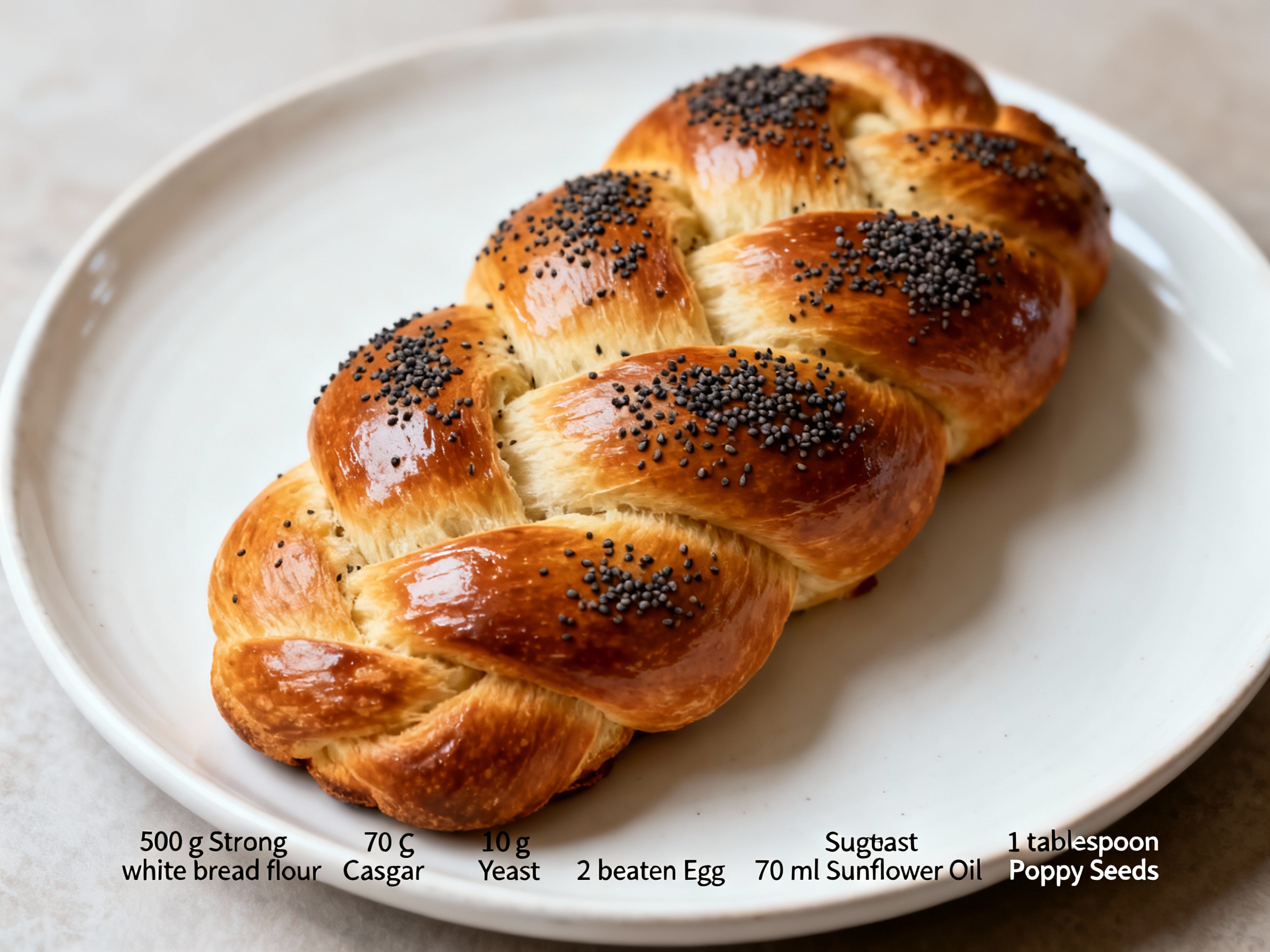
Step 1: Begin by activating your yeast: combine the yeast, a pinch of sugar, and a few tablespoons of lukewarm water in a small bowl. Stir gently to dissolve the yeast completely, then set it aside for about 10 minutes, allowing it to become frothy and alive — a sure sign that your yeast is ready to work its magic. Step 2: While waiting, mix the flour, remaining sugar, and fine salt in a large bowl. Create a central well in the dry ingredients. Into this well, pour half of the beaten egg, the yeast mixture, and oil. Add 200ml of lukewarm water — it should feel pleasantly warm, akin to bathwater. Stir the mixture with a spoon first, then switch to your hands: use one hand to mix while the other stays clean. Gradually bring the dough together, adding extra water sparingly to moisten the dry pockets; the goal is a dough that is moist but not overly sticky. Step 3: Turn your dough out onto a clean, lightly floured surface. Embrace the tactile pleasure of kneading, working the dough with both hands for about 10 minutes until it becomes smooth, flexible, and slightly springy to the touch. If it clings too much, dust your hands and surface with a minimal amount of flour. Use a dough scraper if needed to keep things tidy. Shape the dough into a round ball. Lightly oil a clean bowl and roll the dough ball inside to coat it with oil, preventing drying out. Cover the bowl with a clean tea towel and leave it in a warm spot for about an hour, or until the dough doubles in size. Step 4: Prepare a baking sheet lined with parchment paper. Gently punch the dough down and transfer it to your floured work surface. Divide into three equal portions, using a scale if you prefer precision. Roll each piece into a long, smooth sausage around 25 cm in length, tapering slightly at both ends. Arrange the strands parallel with some space between. Pinch the tops together, then braid the strands neatly down their length, securing the ends by tucking them underneath smoothly. Carefully lift the braided loaf onto the prepared tray and cover loosely with a tea towel. Let it rise until puffy and slightly billowy, approximately 40 minutes. Step 5: While the dough finishes rising, preheat your oven to 200°C (180°C fan/gas mark 6). Gently brush the remaining beaten egg over the entire loaf, making sure to work the glaze into every crevice to achieve a shiny and inviting crust. Sprinkle generously with poppy or sesame seeds if desired for an added touch of flavor and visual appeal. Bake the Challah on the middle rack for 25-30 minutes, monitoring closely. If the crust darkens too quickly after 15 minutes, lightly tent it with foil to prevent burning. You'll know it's ready when the loaf is deeply golden and sounds hollow when tapped on the bottom. Allow the bread to cool on a wire rack before slicing and serving, to ensure the crumb sets perfectly.