Instructions
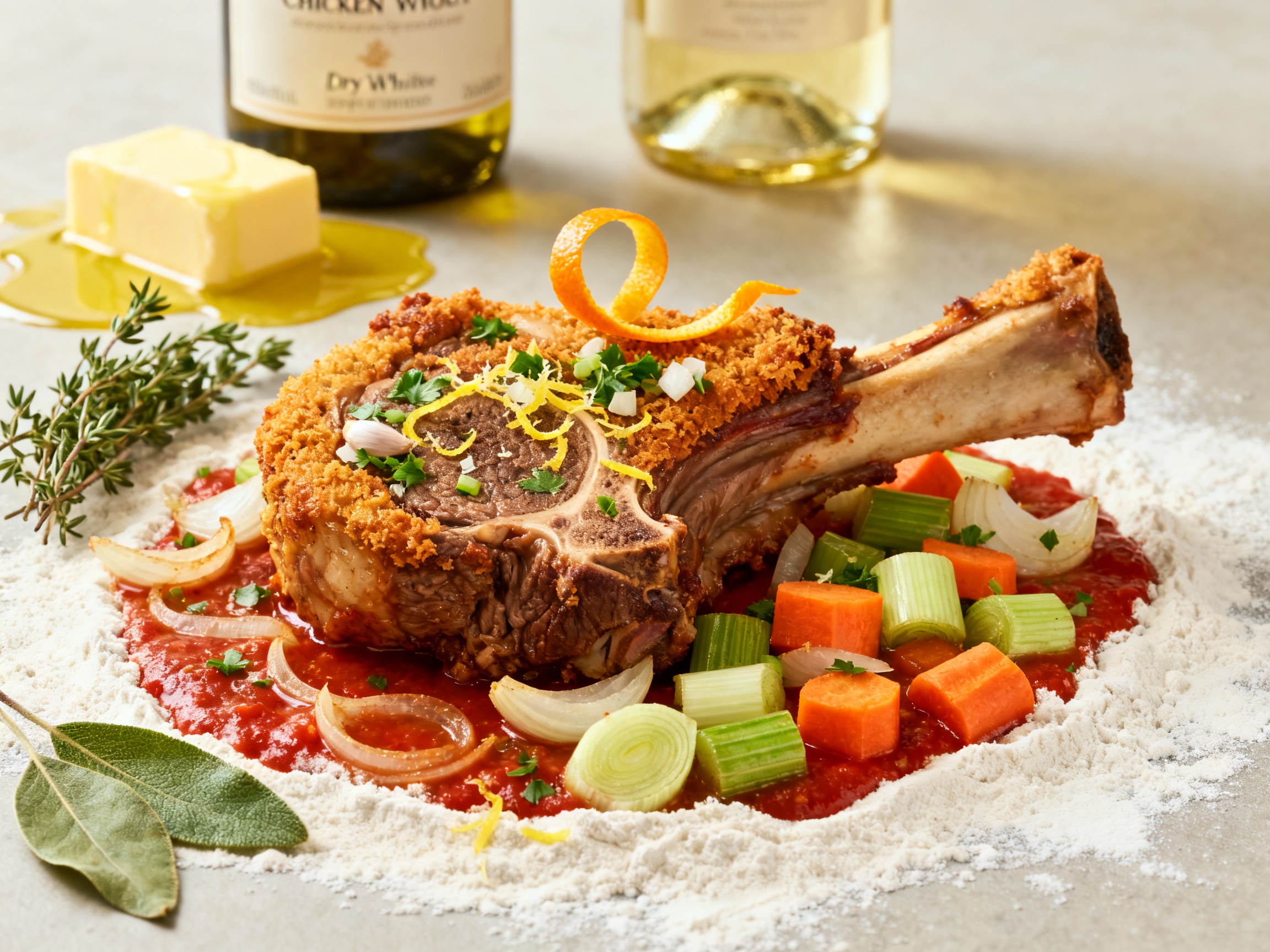
Preheat your oven to a gentle 300 degrees Fahrenheit, setting the stage for a slow, flavorful cook. Begin by preparing the veal shanks: pour the flour into a shallow dish for easy dredging. Season each shank generously on all sides with salt and pepper. Roll each piece in the flour to coat thoroughly, then tap off any excess flour, leaving a delicate veil that will turn golden and crispy. To brown the shanks, heat the olive oil and one tablespoon of butter in a spacious Dutch oven or heavy braising pot over medium-high heat. Once the butter has melted and the oil shimmers invitingly, carefully lay the shanks flat-side down, working in batches if required to avoid overcrowding. Brown the veal until a rich caramel crust develops, roughly five minutes per side—resist the urge to hasten this step, as this Maillard reaction builds deep flavor. Adjust the heat if the butter-oil mixture threatens to burn. Transfer the browned shanks to a large platter and set aside. Pour off the fat from the pot and gently wipe out any blackened bits with a damp paper towel—these caramelized fragments contain incredible flavor and should be preserved carefully. Return the pot to medium heat and melt the remaining butter. When it ceases to foam, add the chopped onion, carrots, celery, and fennel. Season the vegetables with salt and pepper, stirring occasionally, and cook until they begin to soften while maintaining their color, about six minutes. Introduce the garlic, orange zest strips, marjoram, and bay leaf, letting the mixture mingle and release its fragrance for another couple of minutes. Pour in the dry white wine, raising the heat to high to bring it to a lively boil. Stir and allow the wine to reduce by half over about five minutes, intensifying its flavor and sweetness. Next, add the chicken stock and chopped tomatoes with their juices, returning to a boil and cooking until the liquid reduces to roughly one cup, around ten minutes. Nestle the veal shanks upright in the pot with the exposed bone facing up, then pour any resting juices over the top. Cover the pot with a layer of parchment paper pressed gently down to nearly touch the meat, allowing an inch overhang around the edges. Place the lid tightly on the pot. Transfer the pot to the lower oven shelf for a gentle braise. After fifteen minutes, check on the simmering liquid and reduce the oven temperature by ten to fifteen degrees if the braise is too vigorous. Continue cooking for about two hours, turning the shanks and spooning pan juices over the meat after forty minutes to maintain moisture and enhance flavor. The dish is ready when the veal is tender and falling away from the bone effortlessly. While the meat braises, prepare the gremolata by combining minced garlic, chopped parsley, and grated lemon zest in a small bowl. Cover and keep cool to preserve its brightness. Once the veal is fork-tender, remove the pot lid and sprinkle half the gremolata over the shanks. Return the uncovered pot to the oven for an additional fifteen minutes to allow a tantalizing caramelization atop the meat. Using care and a slotted spatula, lift the shanks from the braising liquid. They will be tender and susceptible to falling apart, so handle gently. Arrange on a warmed serving platter, avoiding stacking, and cover loosely with foil to keep warm. Set the braising pot over medium heat on the stove. Skim off any excess fat floating on the surface to keep the sauce clean and flavorful. Taste and assess the sauce’s depth—if it lacks intensity, boil it briskly to reduce for five to ten minutes, stirring occasionally. Season with salt and pepper to taste and, if desired, stir in a spoonful or two of the reserved gremolata for added zest. For serving, portion the veal shanks thoughtfully—one per person is ideal, but generously sized shanks may be divided at natural seams for smaller servings. Don't forget to reserve the marrow bones for the marrow enthusiasts at your table. Plate the shanks alongside a creamy risotto or your favorite starchy sides. Just before serving, sprinkle the remaining gremolata over the veal and spoon the luscious sauce over to warm the fresh herbs and brighten the tempting aromas, inviting everyone to savor this exquisite culinary classic.